Hina Matsuri (雛祭り) – La Fête des Poupées Japonaises : Entre Traditions Ancestrales et Délices Saisonniers
Chaque année, le 3 mars, le Japon célèbre Hina Matsuri (雛祭り), également connue sous le nom de la fête des poupées ou Fête des Filles. Cette journée, parée de rose et de couleurs vives, est empreinte de douceur et de vœux pour la santé et le bonheur des petites filles. C’est une des fêtes les plus anciennes et des plus aimées du calendrier japonais. Derrière l’exposition somptueuse des poupées impériales se cache une tradition riche de sens, où l’alimentation occupe une place tout aussi importante que les rituels eux-mêmes. Des pâtisseries délicates aux soupes raffinées, chaque mets de cette fête raconte une histoire et exprime un souhait pour l’avenir.
Origines et Symbolique de Hina Matsuri
Les racines de Hina Matsuri remontent à une ancienne coutume chinoise appelée Joshi no Sekku, l’une des cinq fêtes saisonnières (Gosekku) importées au Japon durant l’époque Heian (794-1185) . À l’origine, on pratiquait un rituel de purification appelé nagashi-bina : on confiait ses impuretés et ses malheurs à des poupées de papier (katashiro) que l’on relâchait sur les rivières, les laissant s’éloigner avec les eaux. Cette coutume perdure encore aujourd’hui dans certaines régions, notamment à Awashima-jinja dans la préfecture de Wakayama .
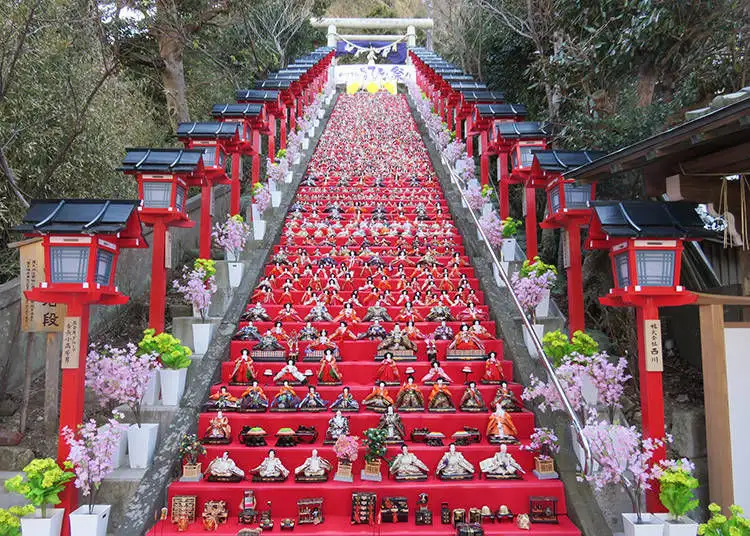
Au fil des siècles, cette tradition évolua et se mêla aux jeux des enfants de l’aristocratie impériale, qui possédaient des poupées sophistiquées. L’usage s’instaura d’exposer ces poupées dans les demeures pour éloigner les mauvais esprits et prier pour la croissance harmonieuse des fillettes . La fête des poupées japonaises était née. De nos jours, les familles disposent fièrement dans leur salon un hina-nagashi (ou hina-kazari), un ensemble d’estrades recouvertes d’un tissu rouge, sur lesquelles sont placées des poupées représentant la cour impériale du palais Heian.
La disposition des poupées est codifiée avec rigueur. Au sommet, l’odairi-bina : l’Empereur (O-dairi-sama) et l’Impératrice (O-hina-sama). Viennent ensuite, sur les niveaux inférieurs, les trois dames d’honneur (san-nin kanjo), les cinq musiciens (gonin bayashi), les deux ministres (udaijin et sadaijin) et enfin trois serviteurs. Chaque élément, des paravents miniatures (byōbu) aux lanternes (tōrō), est chargé de symbolique . Traditionnellement, l’exposition se fait fin février et doit être rangée immédiatement après le 3 mars ; la croyance populaire veut que laisser les poupées exposées plus longtemps retarde le mariage des filles de la maison .
Les Délices Culinaires de Hina Matsuri
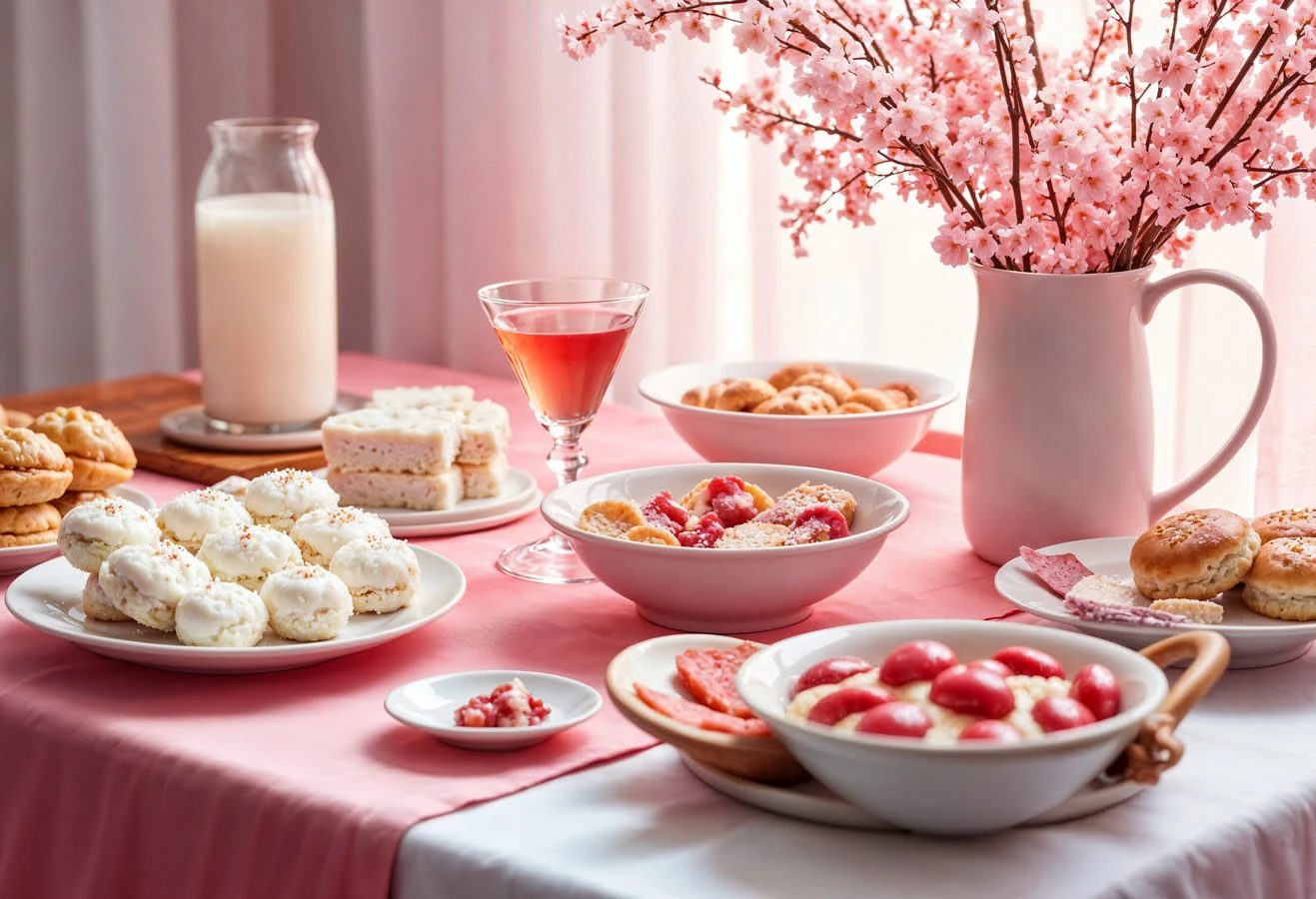
Si les poupées captent le regard, les papilles ne sont pas en reste. La gastronomie de Hina Matsuri est un véritable hommage aux couleurs du printemps – le rose délicat des fleurs de pêcher, le blanc immaculé de la neige fondante, le vert naissant de la nature – et chaque mets possède une signification précise.
Chirashizushi (ちらし寿司) – Le Sushi Éparpillé
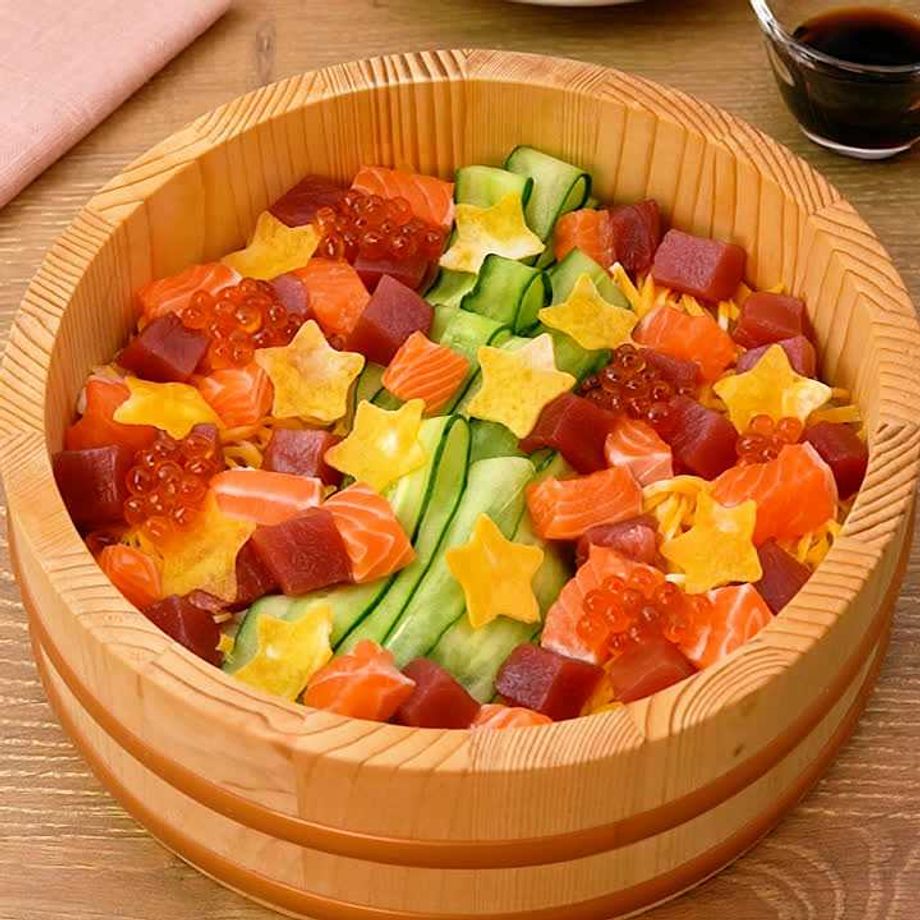
Le plat de résistance de cette fête est le chirashizushi, littéralement « sushi éparpillé ». Contrairement aux sushi roulés (makizushi) ou façonnés (nigiri), le chirashizushi se présente comme un bol de riz vinaigré généreusement recouvert d’une garniture colorée. Les ingrédients sont choisis avec soin : crevettes pour la longévité (leur carapace courbée évoque un vieillard), lotus (renkon) pour la clairvoyance (ses trous symbolisent la capacité à voir l’avenir), pois sucrés (saya-ingen) pour la santé, et tamagoyaki (omelette roulée) pour la réussite scolaire. Les œufs de poisson, notamment les tobiko ou ikura, ajoutent une touche de prospérité. Ce plat, souvent agrémenté de fleurs de cerisier marinées (sakura-denbu) qui lui donnent sa teinte rose caractéristique, célèbre l’abondance et la fertilité .
Hamaguri no Ushio-jiru (蛤の潮汁) – La Soupe aux Palourdes
La soupe aux palourdes (hamaguri) est un élément incontournable du repas de Hina Matsuri. Au-delà de son goût délicat, elle possède une symbolique profonde. La palourde, dont les deux coquilles s’emboîtent parfaitement, est l’image même du couple uni et harmonieux. Elle représente l’idéal d’une relation durable, où deux êtres distincts s’assemblent pour ne faire qu’un. Offrir cette soupe, c’est formuler le vœu que les filles de la famille trouvent un jour un partenaire avec qui elles formeront un couple aussi parfaitement assorti que les valves d’une palourde .
Hina Arare (雛あられ) – Les petites céréales sucrées
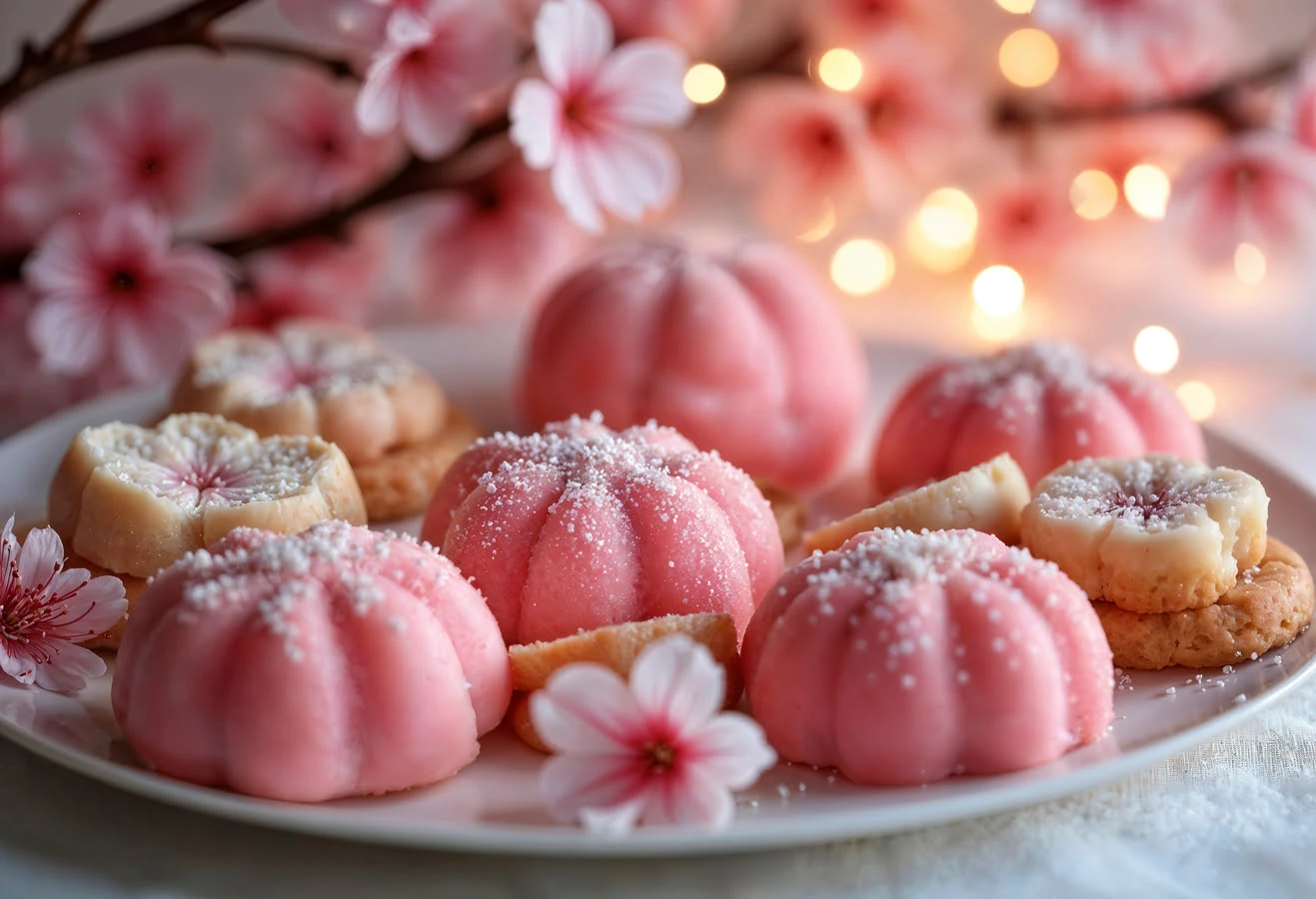
Hina arare est une confiserie légère et croquante, composée de petits grains de riz gluant soufflé enrobés de sucre. Leur caractéristique la plus frappante est leurs couleurs, qui ne sont pas laissées au hasard. Traditionnellement, les hina arare se déclinent en quatre teintes, chacune porteuse d’un message :
- Rose : pour éloigner les mauvais esprits et symboliser le printemps ;
- Blanc : pour la pureté et la propreté du cœur ;
- Vert : pour la santé et la longévité ;
- Parfois jaune : pour la richesse et l’abondance.
Ces petites douceurs, souvent offertes aux enfants, représentent également la renaissance de la nature et la vitalité du printemps .
Hishi Mochi (菱餅) – Le Gâteau de Riz en Losange
Le hishi mochi est un gâteau de riz (mochi) présenté en forme de losange, composé de trois couches superposées. Chaque couche a une signification bien précise :
- Vert (kusa) : la couche inférieure, souvent parfumée à l’armoise (yomogi), symbolise la terre, la régénération et l’expulsion des impuretés ;
- Blanc (shiro) : la couche centrale, parfois parfumée au kudzu (flèche), représente la pureté et la neige, gage de prospérité ;
- Rose (sakura) : la couche supérieure, agrémentée de fleurs de cerisier, évoque le printemps, la vitalité et la protection contre les maux.
Cette superposition de couleurs aux vertus protectrices remonte à l’époque Heian, où l’on croyait que ces trois teintes conjointement éloignaient les maladies et assuraient une croissance saine .
Shirozake (白酒) – Le Saké Blanc
Contrairement au saké classique incolore, le shirozake est une boisson laiteuse, douce et légèrement épaisse. Fabriqué à partir de mochi fermenté et d’alcool de riz, il tire sa couleur blanche opaque de la présence de koji (champignon du riz). Son goût sucré et sa faible teneur en alcool en font une boisson adaptée aux célébrations familiales. Pour les enfants, on propose souvent une version non alcoolisée, l’amazake (甘酒), une boisson sucrée à base de riz fermenté, tout aussi festive .
Une tradition vivace
Aujourd’hui, Hina Matsuri reste une date majeure dans le cœur des Japonais. Si les familles continuent de transmettre les poupées de génération en génération et les présenter lors de la Fête des poupées japonaises, les aspects culinaires ont su évoluer pour s’adapter aux modes de vie modernes. Les hina arare se déclinent désormais en versions régionales et saisonnières, et les grands magasins proposent des chirashizushi et des hishi mochi d’une grande sophistication. Dans les maternités, on offre souvent des hina arare pour célébrer la première Hina Matsuri d’un nouveau-né .
Conclusion
Hina Matsuri est bien plus qu’une simple fête des poupées. C’est un moment où l’art, la tradition et la gastronomie se rencontrent pour célébrer l’enfance et exprimer des vœux d’avenir. Des palourdes enlacées de la soupe hamaguri aux trois couleurs protectrices du hishi mochi, chaque élément culinaire de cette journée est une prière déposée sur la table familiale. Que ce soit à travers l’éclat des poupées impériales ou la douceur d’un chirashizushi rose et blanc, cette fête nous rappelle avec poésie que les traditions les plus vivantes sont celles que l’on partage autour d’un repas, dans la chaleur du foyer.
Allez plus loin
Les fêtes japonaises
Notre approche – Les contenus publiés sur Voyage Culinaire Japonais sont issus d’une expérience personnelle de la culture japonaise et de plusieurs décennies de pratique de la cuisine familiale japonaise. Ils privilégient les usages observés au Japon, les traditions culinaires régionales, les produits authentiques et les témoignages directs, afin de proposer une approche fidèle et documentée de la gastronomie japonaise.